| Brugia malayi |
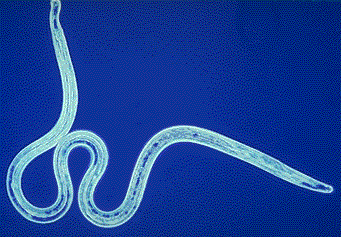
Picture Credit: Brugia malayi L3, Sinclair Stammers, Imperial College, London
|
| filariasis or elephantiasis
|
| Clade III
|
| Filarial worms infect over 100 million people in tropic regions (Wucheria bancrofti is more common than Brugia malayi). Worms, which are spread by mosquitos, reside in the human lymphatic system where they can block lymphatic drainage. Chronic infection can result in swelling and scarring of limbs and genitals.
|
| Library links
|
|
|
| Majority by Filarial Genome Network including Williams Lab at Smith College, Northampton MA and Blaxter Lab at Edinburgh University. Small sequencing project by Washington University Nematode EST Project, The Genome Institute, Washington University School of Medicine, St. Louis, MO. The complete genomic sequence for B. malayi was done by The Institute of Genomic Research (TIGR), funding by NIH-NIAID. Improved version of the genome and the annotation is available at WormBase (link)
|
Gary Weil, Washington University School of Medicine, St. Louis, MO.
Mark Blaxter, Edinburgh University
Steve Williams, Smith College
Elodie Ghedin, TIGR
|
| Makedonka Mitreva
|
| NemaGene Gene table for Brugia malayi
|
|
NemaGene gene count :17,989
|
BLAST vs. reads grouped by library
BLAST vs. transcript contigs & genes
|
| Codon Usage table
|
NemFam search
|
| GO Associations
|
| NemaPath
|
| Microarray data
|
| mass spec data avaliable
|
| HelmCoP search
|
| Brugia malayi at WormBase
|
| Brugia malayi species page at WormBase ParaSite
|
| Brugia malayi species page at Nembase4
|